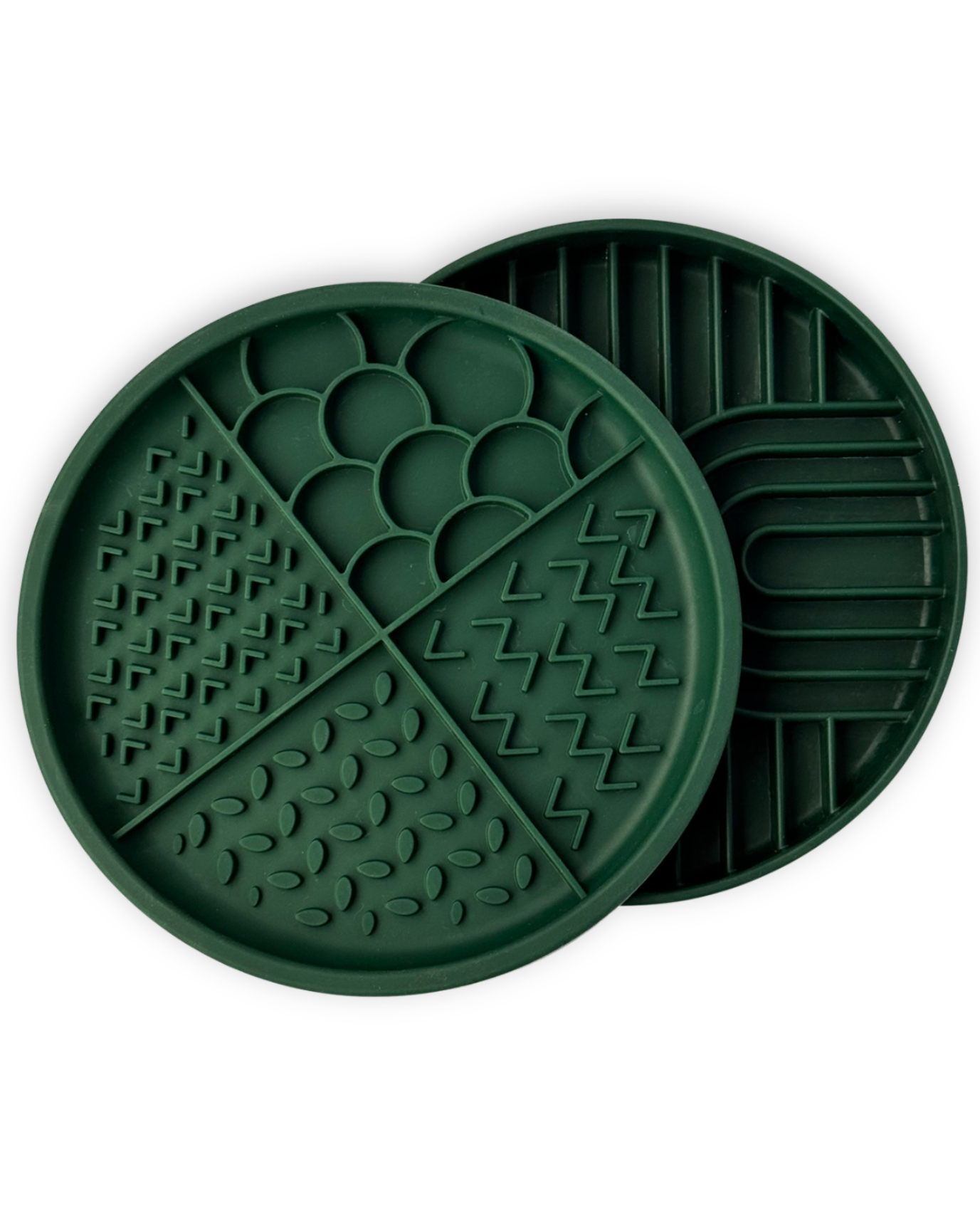
Slow feeding has many benefits.
Studies examining slow feeding in dogs found consistent benefits across meal duration, enrichment, stress reduction and eating behaviour. So no, it's not just a trend.
Slow feeders increase meal duration
Dogs using feeding toys and slow feeding tools consistently took longer to eat. Some studies found meal duration doubled or even quadrupled depending on the feeding method used.
That matters because many modern dogs eat incredibly quickly. Fast eating is a normal behaviour, but it can create bloating, poor satiety signalling and frantic post-meal energy that slow feeding can help reduce.
 Slow feeders increase meal duration.
Slower eating may support nervous system regulation
One study found that delayed feeding reduced sympathetic nervous system activation in fast-eating dogs. In plain terms: slower eating appeared to produce a calmer physiological response after meals.
Other research found feeding enrichment reduced cortisol levels over time. That doesn't make a lick mat a calming cure. But it does suggest enrichment-based feeding can support more regulated feeding experiences for some dogs.
Enrichment isn't meant to replace training, boundaries or rest. It's one part of a fuller picture.
Slow feeding encourages natural behaviours
Licking. Sniffing. Working for food. Exploring. These are all things dogs are naturally motivated to do. Studies using puzzle feeders and enrichment feeding found increases in activity, exploratory behaviour and engagement.
Giving dogs opportunities to perform these behaviours around mealtimes isn't a luxury. For most dogs, it's just a better way to eat.